


About TMS Therapy
Transcranial Magnetic Stimulation (TMS) is a fast-acting and medication-free treatment for depression. It is particularly recommended for patients who did not respond to medication or other forms of treatment.
Scientific studies have shown that two out of three patients felt they benefited from TMS.
TMS can also be used for patients looking to lower the dose of antidepressant medication or for anyone hoping to cease taking medication entirely. This would be done under supervision of a doctor. Magnetic stimulation can therefore be an excellent way to support this transition process.
**As of August 2026, TMS and SPRAVATO services are located exclusively at our Medina Office.**
Want to Know if TMS is Right for You?
To find out if TMS is the answer you’ve been looking for, click the QR code to the right or scan it with your phone's camera.
Fill out the Short Questionnaire and a Specialist from our TMS Team will contact you.
Frequently Asked Questions
What is TMS therapy?
Transcranial magnetic stimulation, also known as repetitive transcranial magnetic stimulation, is a noninvasive form of brain stimulation in which a magnetic field is used to stimulate nerve cells in the area of the brain that controls mood. These magnetic pulses have a positive effect on the brain’s neurotransmitter levels, making long-term remission from depression possible. TMS is typically used when other depression treatments have not been effective.
What does TMS treat?
TMS is approved by the Food and Drug Administration to treat individuals with severe depression who have not responded to medications, OCD, and anxious depression. TMS is also being used off label for PTSD, Tinnitus, smoking cessation, and other mood disorders, however this is not covered by insurance.
What is does a typical TMS session like?
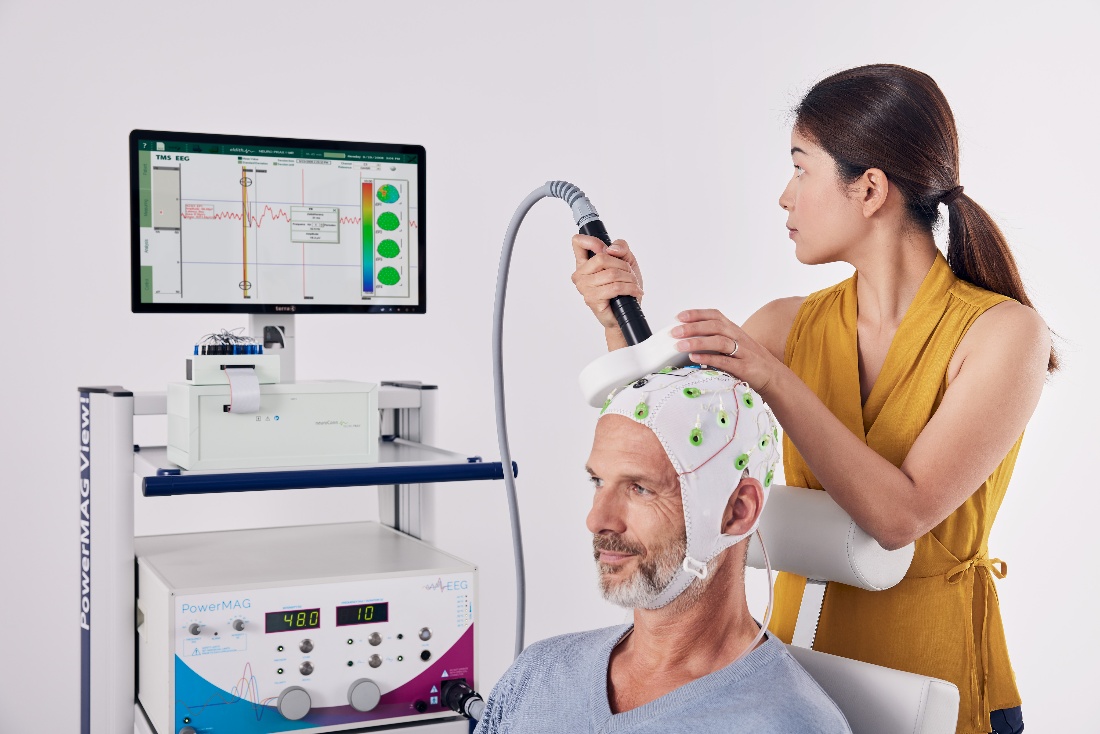
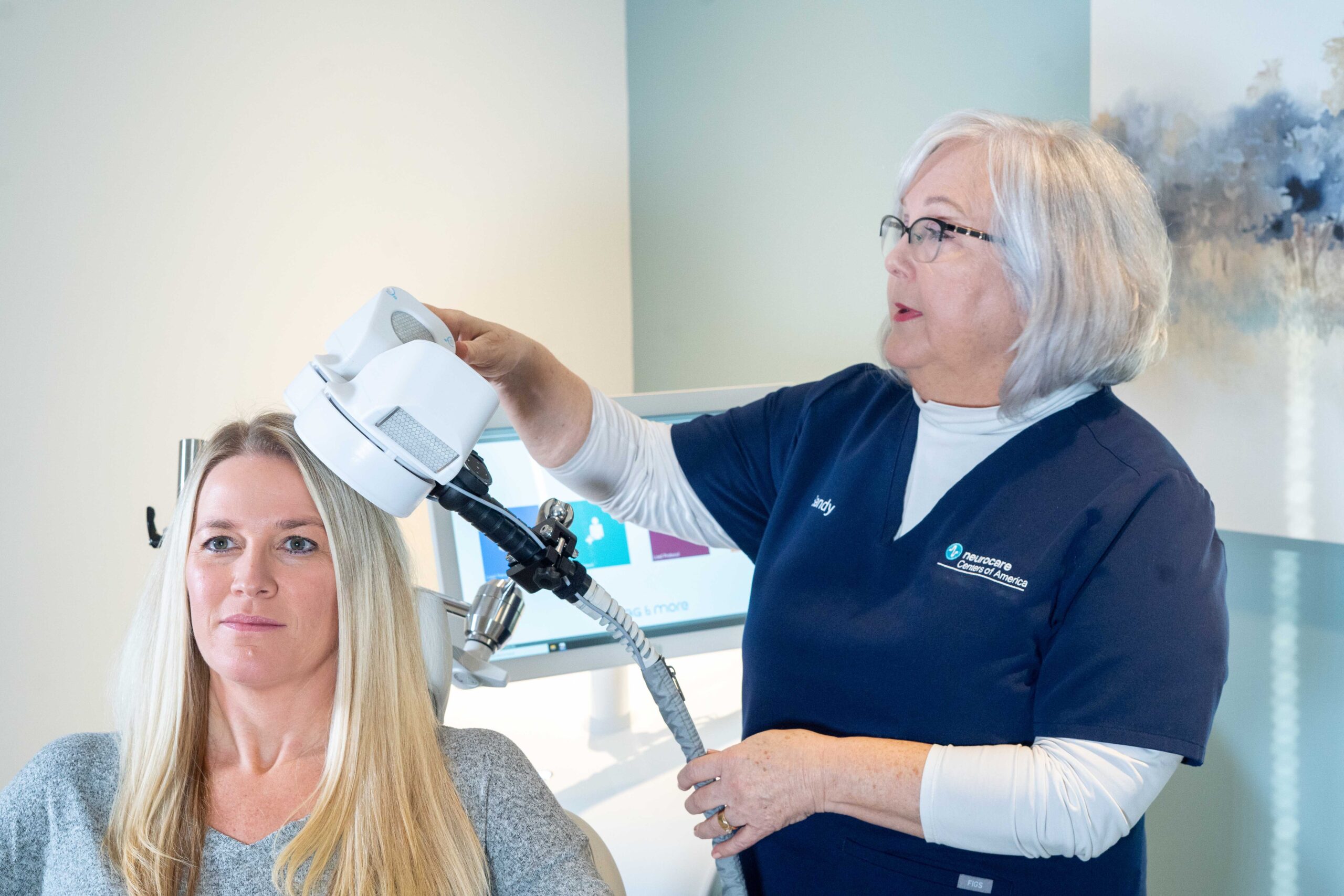
During a TMS session, you will recline comfortably in the treatment chair. A small magnetic coil is placed lightly on your head. You will then hear a clicking sound and feel a tapping sensation on your head as the coil painlessly stimulates nerve cells in the region of your brain involved in mood control and depression. Patients typically listen to music or audio books while they are receiving treatment. You are then able to resume normal activities following the treatment and can drive yourself to and from sessions.
How long does TMS take to start working?
Compared to most antidepressants, which usually take about six weeks to show results, TMS works quickly. Patients report changes in mood starting as early as the first week of treatment. Most patients require the full length of treatment, about 36 sessions, to experience the best results.
Who administers TMS?
TMS is prescribed by a physician trained in administering the treatment protocol and the initial motor threshold. The treatment itself is administered by an experienced technician under the supervision of the physician.
How long is a TMS procedure?
TMS therapy involves a series of treatment sessions. Treatment sessions typically last around 20 minutes and patients receive TMS five days a week. A typical course of TMS is seven weeks. However, this can vary depending on an individual’s response to treatment.
What are the side effects of TMS?
TMS is well-tolerated and associated with few side effects. The most common side effect is headaches. These are mild and generally diminish within the first week or two of treatment. Over-the-counter pain medication can be used to treat these headaches. Patients may also report irritation at the site of treatment. This also diminishes within the first week of treatment
Who cannot get TMS therapy?
Patients with any type of non-removable metal in their heads (with the exception of braces or dental fillings), should not receive TMS. Failure to follow this rule could cause the object to heat up, move, or malfunction, and result in serious injury or death. The following is a list of metal implants that can prevent a patient from receiving TMS:
- Aneurysm clips or coils
- Stents in the neck or brain
- Deep brain stimulators
- Electrodes to monitor brain activity
- Metallic implants in your ears and eyes
- Shrapnel or bullet fragments in or near the head
- Facial tattoos with metallic or magnetic-sensitive ink
- Other metal devices or object implanted in or near the head
Can I receive TMS if my insurance plan does not cover it?
At Charak Center for Health and Wellness, we will make every attempt to receive a prior authorization from your insurance carrier for TMS treatment. However, if all attempts are unsuccessful, then you can still receive TMS through our self-pay program. Price per treatment will vary depending on your diagnosis and the severity of your condition. Please give us a call to set up a consultation.
How we use Creyos in our clinic
Taking a Creyos Health assessment is straightforward and hassle-free—no need for any fancy gadgets. You can do it on any device you prefer, like your laptop, desktop, or tablet, and it works with all the latest web browsers. Here's a quick run-through of the steps: Your healthcare provider set up an time for you to do the assessment. Before you take the assignment, you will be guided on what to expect, how to tackle the assessment, and how long it'll probably take. After you've got the hang of the tutorial, it's showtime! Complete the task, and once you're done, a report will zip off to your practitioner to check out.

Frequently asked questions
What exactly is TMS Therapy?
Transcranial magnetic stimulation, also known as repetitive transcranial magnetic stimulation, is a noninvasive form of brain stimulation in which a magnetic field is used to stimulate nerve cells in the area of the brain that controls mood. These magnetic pulses have a positive effect on the brain’s neurotransmitter levels, making long-term remission from depression possible. TMS is typically used when other depression treatments have not been effective.
What does TMS treat?
TMS is approved by the Food and Drug Administration to treat individuals with severe depression who have not responded to medications. TMS is also being used off label for PTSD, OCD, Tinnitus, and other mood disorders, however this is not covered by insurance.
What is a typical TMS session like?
During a TMS session, you will recline comfortably in the treatment chair. A small magnetic coil is placed lightly on your head. You will then hear a clicking sound and feel a tapping sensation on your head as the coil painlessly stimulates nerve cells in the region of your brain involved in mood control and depression. Patients typically listen to music or audio books while they are receiving treatment. You are then able to resume normal activities following the treatment and can drive yourself to and from sessions.