

Can People With Dementia Receive TMS? What Families and Patients Should Know
Can people with dementia receive TMS? Learn what clinicians evaluate, including safety, diagnosis, and eligibility criteria before treatment.

When dementia affects memory and attention, families often ask whether treatment options extend beyond symptom management. Medications may slow progression, but they rarely restore cognitive function. As research into noninvasive brain stimulation expands, many begin wondering,can people with dementia receive TMS?
Transcranial magnetic stimulation has been studied for its potential to influence brain networks involved in memory and executive function. Understanding both the potential benefits and the current limitations of the evidence helps families make informed decisions based on clinical facts, not assumptions.
For a closer look at how diagnosis, safety factors, and treatment history influence TMS eligibility, visit charakcenter.com for detailed information on clinical assessment and care planning.
Not All Dementia Is the Same
Dementia is not a single condition but a group of disorders characterized by progressive cognitive decline that interferes with daily functioning. The underlying cause and pattern of impairment vary by type.
Alzheimer’s Disease
An estimated 7.2 million older Americans are currently living with Alzheimer’s dementia, making Alzheimer’s disease the most common form of dementia. It is primarily associated with gradual memory loss, disorientation, and impaired executive function. As the disease progresses, language and functional abilities decline.
Vascular Dementia
Nearly 13.9 million Americans are projected to be living with dementia by 2060. Vascular dementia, one of the major subtypes, results from reduced blood flow to the brain, often following stroke or chronic small vessel disease. Symptoms may include slowed thinking, impaired judgment, and motor deficits, with cognitive changes sometimes appearing more abruptly than in Alzheimer’s disease.
Frontotemporal Dementia
An estimated 15 to 22 per 100,000 adults between ages 45 and 64 are affected by frontotemporal dementia. This form of dementia involves the frontal and temporal lobes of the brain and often presents with changes in personality, behavior, impulse control, or language rather than early memory loss.
Dementia With Lewy Bodies
Dementia with Lewy bodies involves abnormal protein deposits in the brain. It is characterized by fluctuating cognition, visual hallucinations, sleep disturbances, and parkinsonian motor symptoms.
Each type follows a different progression pattern, which is why diagnosis and treatment planning must be individualized.
TMS and Brain Function
Transcranial magnetic stimulation has a direct impact on brain function by enhancing cortical excitability and strengthening connections between brain regions. One of the primary targets in dementia treatment is the dorsolateral prefrontal cortex, a key area for executive function, working memory, and decision-making.
Stimulating this region with TMS can lead to improvements in cognitive abilities and daily functioning. Additionally, TMS can be applied to the motor cortex to help address motor symptoms that sometimes accompany dementia. Research indicates that TMS is most effective in the early stages of dementia, where it can produce significant improvements in cognitive function and support better outcomes for patients.
What Does the Research Say About Transcranial Magnetic Stimulation in Dementia?
Research on transcranial magnetic stimulation in dementia is still developing. Most published studies are small, short-term clinical trials rather than large, multi-year investigations. Several have explored whether repetitive TMS (rTMS) can influence brain regions involved in memory, attention, and executive function, particularly in Alzheimer’s disease.
Some trials report modest improvements in cognitive testing scores when TMS is applied to specific cortical targets, often alongside cognitive training. In certain cases, benefits appear more noticeable in patients with mild to moderate impairment rather than advanced disease. However, results are not uniform. Protocols differ. Stimulation sites vary. Follow-up periods are limited.
Importantly, TMS is not FDA-approved as a primary treatment for dementia. Most use in this population remains investigational or is considered when addressing co-occurring major depressive disorder, often alongside coordinated support services such as case management to ensure comprehensive care planning.
When Is TMS Even Being Considered in Someone With Dementia?
TMS is not typically introduced as a primary treatment for dementia-related cognitive decline. Dementia is not a single disease but a syndrome, a collection of symptoms resulting from brain damage caused by various underlying conditions. In clinical practice, TMS is more often considered under specific circumstances, including:
- Co-occurring major depressive disorder, particularly when symptoms are moderate to severe in older adults with Alzheimer’s disease AD or mild cognitive impairment
- Treatment-resistant depression, when multiple pharmacological treatments have not produced adequate response
- Significant apathy or worsening behavioral symptoms affecting cognitive performance and overall functioning
- Stable neurological status, without uncontrolled seizure risk or acute cerebrovascular instability
Early signs of cognitive deficits, such as memory loss or changes in behavior, may prompt consideration of TMS, especially when other symptoms like depression or apathy are present. Neurodegenerative diseases often present with overlapping symptoms, making careful assessment essential.
In these cases, the therapeutic target is depression, not the underlying neurodegenerative process. When evaluating TMS candidacy, an individualized review should include life expectancy and the presence of other symptoms to ensure appropriate treatment decisions.
Clarifying the primary condition being treated helps determine whether TMS falls within established psychiatric indications. This evaluation often occurs alongside coordinated services such as case management to ensure care is aligned with the patient’s overall clinical needs.
Neurological Risks in Patients With Dementia
Because TMS directly stimulates cortical brain regions, neurological risk assessment is a central part of determining candidacy in patients with dementia. Neurodegenerative disorders involve progressive structural and functional changes in the brain.
While TMS is generally well tolerated in properly screened adults, dementia requires an added layer of caution and individualized review.
Seizure Risk
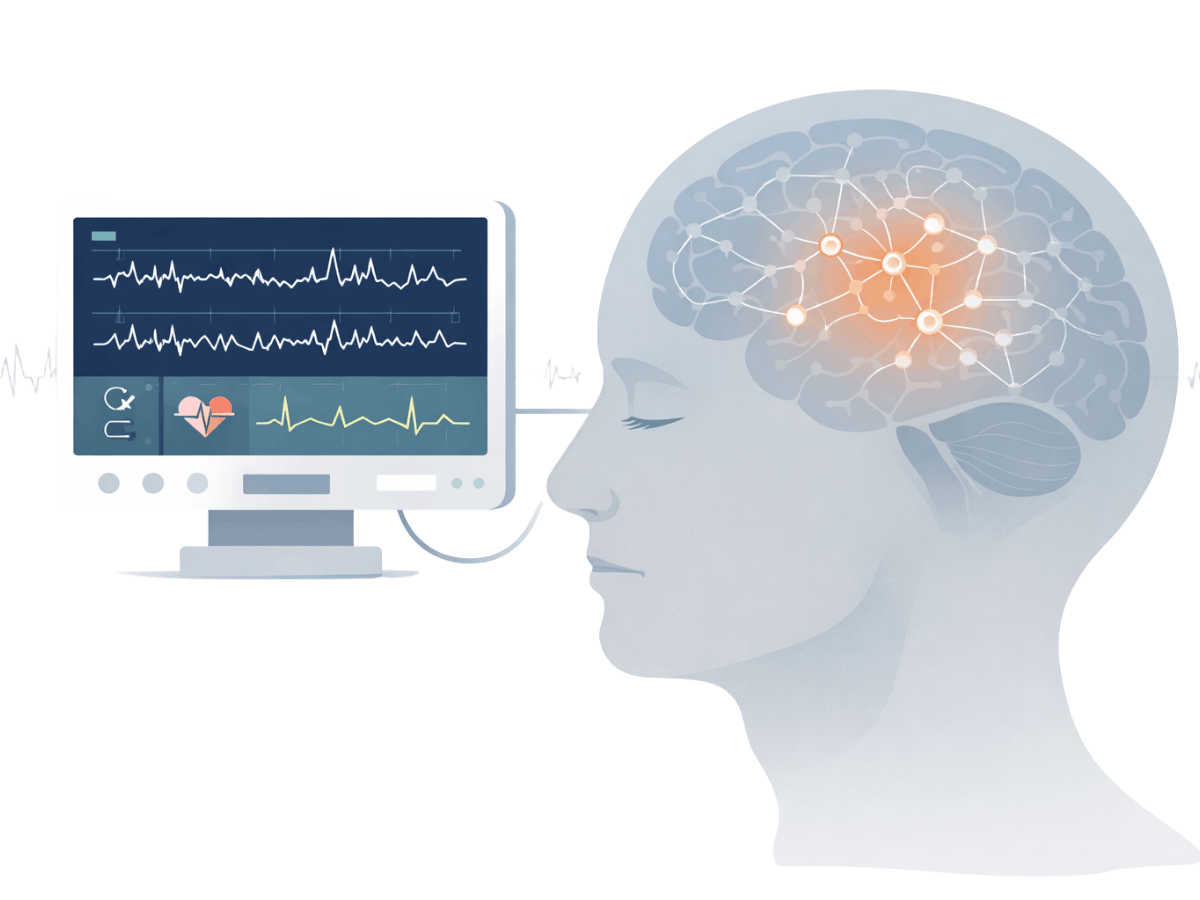
Seizures are rare in TMS when safety guidelines are followed. However, underlying neurological conditions can increase vulnerability. A history of epilepsy, unexplained seizure activity, prior stroke, or significant cerebrovascular disease requires careful evaluation before proceeding with stimulation.
Structural and Vascular Changes

Cortical atrophy, white matter disease, and prior brain injury may influence how neural tissue responds to stimulation. Brain imaging findings, when available, can inform clinical decision-making and risk stratification.
Medication and Neurological Stability

Certain medications lower seizure threshold. Given that polypharmacy is common in dementia, a detailed medication review is necessary to assess cumulative neurological risk.
Neurological clearance is determined case by case through structured evaluation rather than diagnosis alone.
Setting Realistic Expectations
When TMS is considered in the context of dementia, clarity around goals is essential.
TMS Is Not a Treatment for Alzheimer's Disease or Dementia Progression
TMS does not reverse neurodegeneration or halt the underlying disease process. It is not an FDA-approved therapy for dementia itself.
- The Primary Target Is Often Depression: In many cases, tms therapy is considered to treat co-occurring major depressive disorder in older adults with Alzheimer’s disease AD or other dementia types. The goal is to improve mood-related brain activity through repetitive transcranial magnetic stimulation, not to reverse disease progression.
- Cognitive Function Effects Are Variable: Some studies have explored whether high frequency rTMS may influence cognitive performance in mild cognitive impairment or moderate AD. Findings show modest and inconsistent changes. Results are not uniform, and further studies are needed.
- Response Depends on Individual Factors: Outcomes vary based on AD diagnosis stage, neurological stability, medication profile, and overall health. Patients with severe AD or increased seizure risk may not be appropriate candidates. Clear benchmarks should be defined before starting this non invasive treatment.
Clear treatment goals help ensure that any decision to pursue TMS is based on measurable outcomes, not assumptions.
Moving Forward With a Clinical Evaluation of Clinical Efficacy
A diagnosis of dementia does not automatically qualify or disqualify someone from receiving TMS. Eligibility is established through a structured clinical evaluation that considers psychiatric history, neurological stability, medical risk factors, current medications, and clearly defined treatment goals.
In some cases, TMS may be appropriate to address co-occurring major depressive disorder within established psychiatric indications. In others, advanced cognitive impairment, elevated seizure risk, or overall medical instability may limit suitability. Determination is individualized and guided by clinical evidence.
Decisions should be based on comprehensive evaluation, not assumptions or isolated research findings. For individualized guidance, call 1-855-4CHARAK (1.855.424.2725) or fill out the contact form to request a clinical evaluation and discuss appropriate treatment options.